
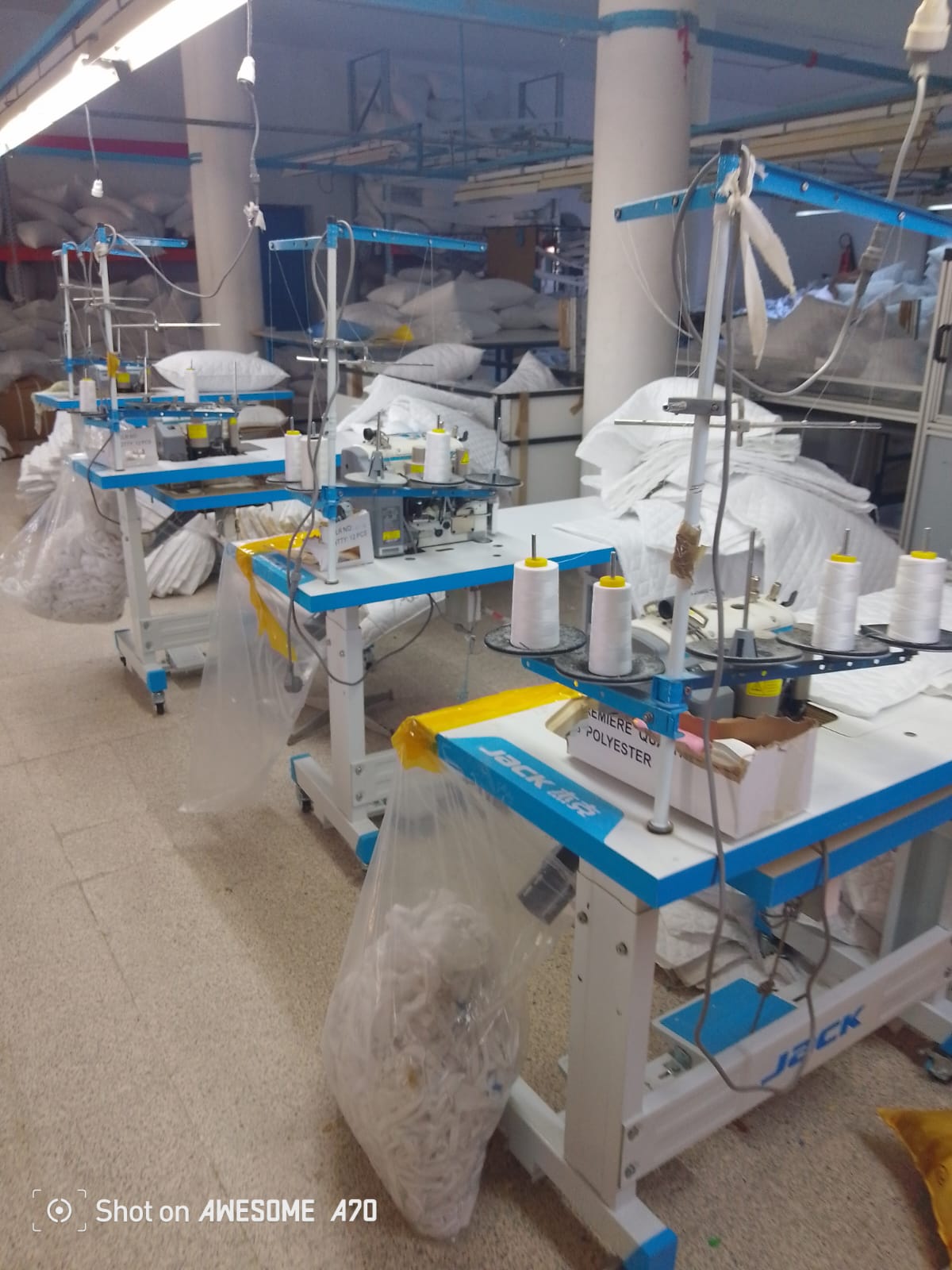
Tunisian Textile Industry: A Strategic Engine for Accelerating Exports

An Industry at the Heart of Tunisia’s Competitiveness
The Tunisian textile and apparel industry remains one of the key pillars of the national economy. With its proximity to European markets, established expertise, and integrated industrial ecosystem, the sector plays a critical role in national exports, industrial employment, and investment attractiveness.
As global supply chains continue to evolve, Tunisia has a strategic opportunity to strengthen its position as a competitive, flexible, and sustainable manufacturing platform serving leading international brands.
Key Figures
- Nearly 1,400 companies operate across Tunisia’s textile and apparel industry.
- More than 150,000 jobs are directly supported by the sector, making it one of the country’s largest industrial employers.
- More than 80% of production is destined for export markets.
- The European Union remains the sector’s primary market, with strong commercial ties to France, Italy, and Germany.
- Textile and apparel remain among Tunisia’s leading export industries and a major driver of industrial growth.
The Sector’s New Strategic Priorities
International competition, changing consumer expectations, and increasingly demanding sustainability requirements are redefining the drivers of competitiveness.
Companies must move beyond traditional subcontracting models to capture greater added value, adopt Industry 4.0 technologies, improve operational performance, and meet the environmental and social standards of international markets.
The ability to shorten lead times, provide flexible production capabilities, and ensure end-to-end traceability is becoming a major competitive advantage as international buyers increasingly seek suppliers that are close, reliable, agile, and responsible.
High-Value Growth Opportunities
The expansion of nearshoring in Europe, supply-chain diversification, and the growing demand for technical textiles are opening new opportunities for Tunisian manufacturers.
Investments in automation, digital transformation, higher-value production, and the development of proprietary brands can strengthen competitiveness and improve long-term profitability.
Innovation, international certifications, and the integration of ESG criteria are also becoming essential to accessing the most demanding global markets.
An Industry with Strong Investment Potential
With decades of industrial expertise, close logistical proximity to Europe, and a well-established manufacturing ecosystem, Tunisia has the fundamentals to consolidate its position as a leading textile platform within the Euro-Mediterranean region.
For industrial companies and investors, the opportunity extends beyond production capacity. Modernization, innovation, vertical integration, sustainable manufacturing, and value-added development can create new avenues for international growth and long-term competitiveness.